Anxiety Therapy for Children NJ
Anxiety Therapy for Children NJ: Is It Anxiety or Just a Phase?
If your child is melting down over small things, avoiding activities they used to enjoy, or constantly asking “What if…?”, you may be wondering whether this is just a stage or something more.
For many parents, this question comes with a quiet layer of worry. You don’t want to overreact. But you also don’t want to overlook something important. When families begin searching for anxiety therapy for children NJ, it is often because something feels different, even if it is hard to name.
Let’s take a closer look at what may actually be happening beneath the surface.
When Anxiety Doesn’t Look Like Anxiety
Most people expect anxiety to look obvious, like panic attacks or visible fear. But in children ages 8 to 12, anxiety is often quieter and easier to misinterpret.
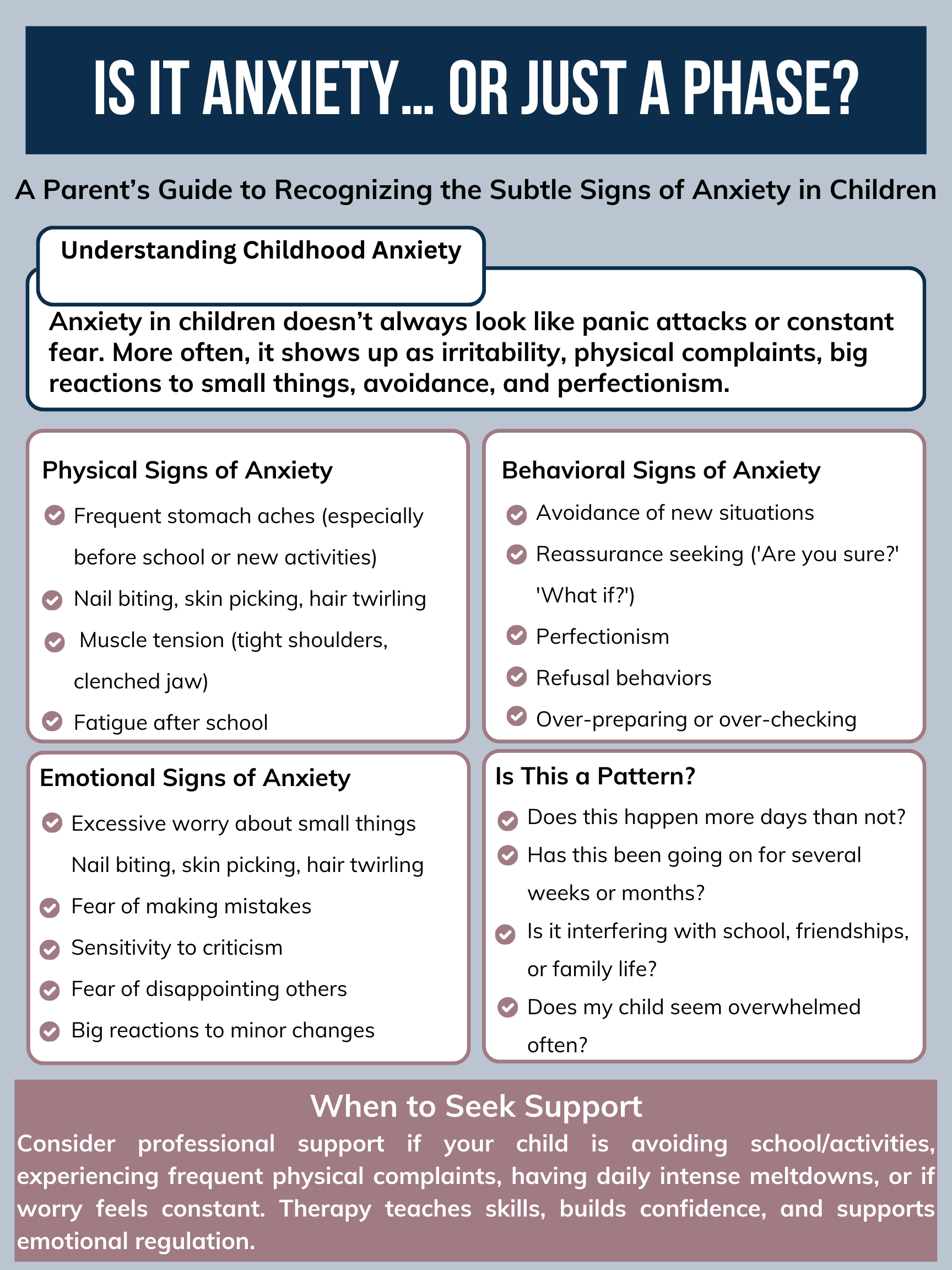
It can show up as:
Irritability instead of fear
Complaints about stomach aches before school
Big reactions to small changes
Avoiding new or unfamiliar situations
Perfectionism or needing things “just right”
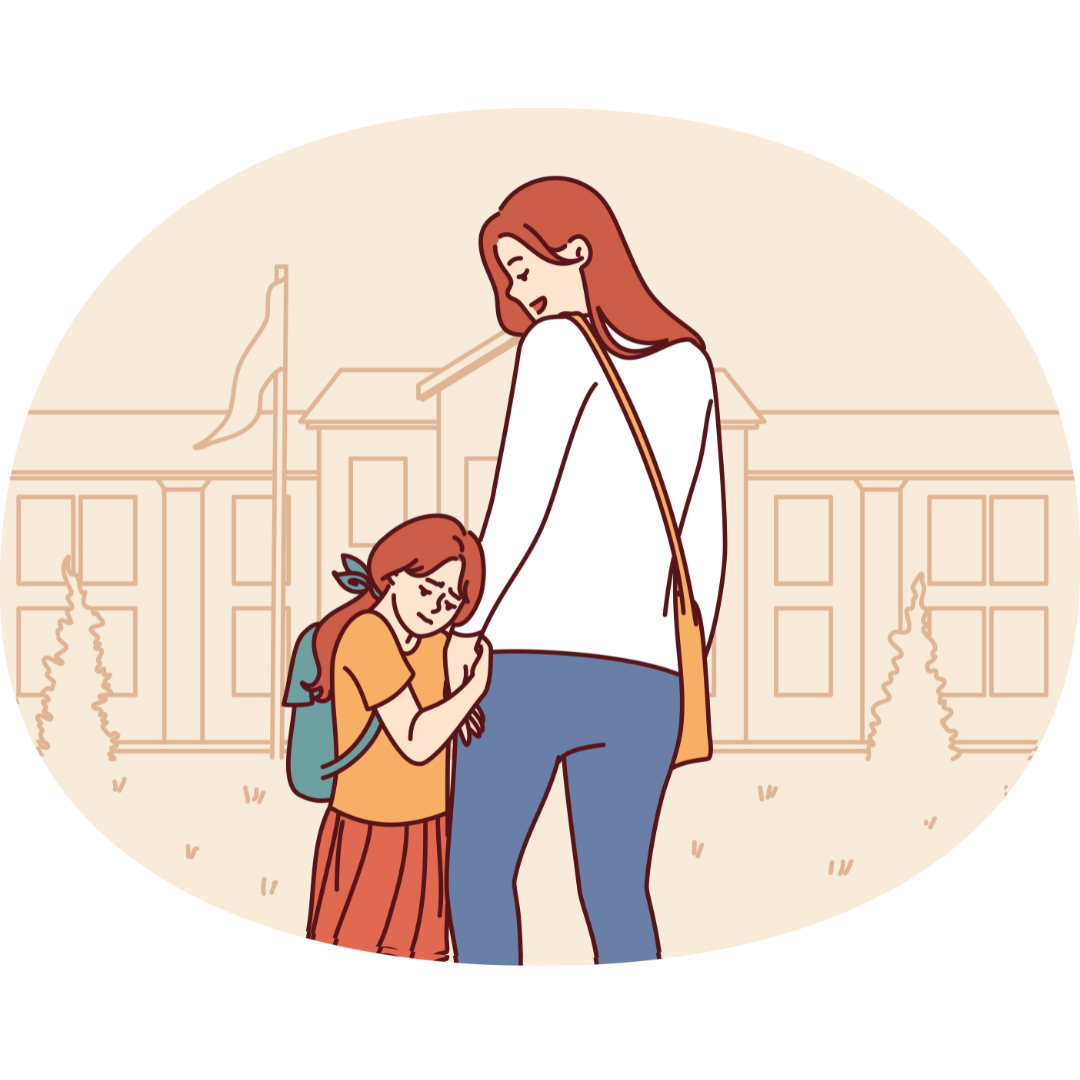
For example, a child who suddenly refuses to go to a birthday party may not be trying to be difficult. They may be overwhelmed by uncertainty about what will happen, who will be there, or how they will fit in.
Anxiety is not a personality flaw. It is a nervous system trying to stay safe, sometimes working overtime.
The Physical Signs Parents Often Miss
Children do not always have the language to say, “I feel anxious.” Instead, their body communicates for them.
You might notice:
Frequent stomach aches, especially before school
Headaches or fatigue after a full day
Nail biting, skin picking, or hair twirling
Muscle tension such as tight shoulders or clenched jaw
Imagine a child who wakes up every school day complaining their stomach hurts, yet feels fine on weekends. This is not random. Their body is responding to stress, even if they cannot explain it.
These are signals, not attention-seeking behaviors. Your child’s nervous system may be overwhelmed.
The Behavioral Patterns That Get Misinterpreted
Anxiety-driven behaviors are often labeled as defiance, laziness, or being overly sensitive. But when you look more closely, a pattern often appears.
✔ Avoiding new situations or challenges
✔ Constant reassurance seeking like “Are you sure?”
✔ Over-preparing or checking work repeatedly
✔ Refusing school or activities
✔ Getting stuck on doing things perfectly
For instance, a child who spends an hour rewriting homework may not be procrastinating. They may be afraid of making a mistake or being judged.
From the outside, it can look like resistance. Underneath, it is often fear of getting it wrong or not feeling in control.
The Emotional Side: What Your Child May Not Say Out Loud
Children in this age group are becoming more aware of expectations. This includes school performance, friendships, and how others see them.
That pressure can show up as:
Excessive worry about small things
Fear of making mistakes
Sensitivity to criticism
Fear of disappointing others
Big emotional reactions to minor changes
Many of these children are thoughtful, bright, and deeply aware. A child who cries over a small correction may not be overreacting. They may already feel like they are falling short internally.
They are often carrying more than they show.
Is It a Phase or Something More?
Sometimes these behaviors are part of normal development. But there is an important distinction:
Phases pass. Patterns persist.
You might ask yourself:
Is this happening more days than not?
Has this been going on for weeks or months?
Is it interfering with school or friendships?
Does my child seem overwhelmed often?
If the answer is yes, it may be time to look more closely.
Not because something is wrong with your child, but because they may need support managing what feels too big to handle alone.
Many families begin exploring anxiety therapy for children NJ at this stage, not out of urgency, but out of a desire for clarity and support!
A Small Shift That Can Make a Big Difference
In moments of distress, it is natural to want to reassure your child quickly.
Instead of saying:
“Don’t worry, you’ll be fine.”
Try:
“I can see this feels really hard right now. Let’s figure it out together.”
For example, if your child is anxious about a test, this shift helps them feel understood rather than dismissed. It also creates space for problem-solving.
This approach does two important things:
✔ It validates your child’s internal experience
✔ It helps their nervous system settle
You are not reinforcing anxiety. You are creating safety, which is what actually helps reduce it over time!
When to Consider Anxiety Therapy for Children NJ
If your child is experiencing:
✔ Avoidance of school or activities
✔ Frequent physical complaints without medical cause
✔ Daily or intense emotional reactions
✔ Persistent worry that does not ease
It may be time to consider additional support.
While weekly therapy can be helpful, some children benefit from more focused approaches that address the nervous system directly.
For example, a child who has developed strong patterns of worry may need support learning how their body responds to stress, not just strategies to think differently.
In anxiety therapy for children NJ, treatment often focuses on helping children feel safe in their bodies again, not just managing behavior.
Looking Beneath the Surface
In my work with children and teens, including those receiving anxiety therapy for children NJ, we focus on what is driving the pattern, not just what is visible.
For instance, a child who refuses school may not simply dislike school. They may feel overwhelmed by social dynamics, academic pressure, or fear of making mistakes.
When we address the underlying nervous system response, we often see changes in behavior follow naturally.
Real change does not come from telling kids to calm down.
It comes from helping their system learn how.
You Do Not Have to Wait and See
If you have been going back and forth, wondering whether your child will grow out of this, you are not alone.
At the same time, you do not have to stay in uncertainty.
You can gain clarity about what is happening.
You can understand your child’s patterns.
You can explore whether anxiety therapy for children NJ is the right next step.
Local Support for Families in New Jersey
If you are a parent in New Jersey noticing these patterns, support is available.
Working with a therapist who specializes in anxiety therapy for children NJ can help your child:
✔ Feel more confident navigating everyday challenges
✔ Learn how to manage overwhelming emotions
✔ Reduce physical symptoms of anxiety
✔ Build resilience over time
You deserve support as a parent, too!
Take the Next Step
If this resonates with what you are seeing at home, consider reaching out for a consultation.
You do not need to have all the answers before starting.
You just need a place to begin.
Book a consultation to explore anxiety therapy for children NJ and learn what support could look like for your child!