Common Mistakes Parents Make with Anxious Kids
The Most Common Mistakes Parents Make with Anxious Kids—And How to Fix Them
If you’re raising an anxious child, chances are you’re doing everything you can to help them feel better. You Google strategies, read parenting books, and try to stay calm even when your child is falling apart over something that seems small. You care deeply—and it shows.
But here’s the truth: even the most loving, well-meaning parents sometimes accidentally reinforce their child’s anxiety…
And it’s not because you’re doing something “wrong.” It’s because anxiety is sneaky, and it often shows up in ways that trick our protective instincts into making it worse.
So let’s talk about the three most common parenting habits that unintentionally feed anxiety—and what to do instead to truly help your child feel stronger, more confident, and more in control.

Are you unknowingly making your child’s anxiety worse?
✔️ Reassuring them over and over again without helping them build coping skills
✔️ Avoiding their triggers to prevent meltdowns
✔️ Jumping to solutions instead of first validating their feelings
These common mistakes are easy to make—and easier to fix with the right support!
Mistake #1: Reassuring Over and Over Again
“You’ll be fine.” “Nothing bad will happen.” “I promise.”
Sound familiar?
When your child is anxious, it’s natural to want to calm their fears. Reassurance can feel like the right response—especially in the moment. But over time, repeated reassurance teaches your child to rely on you to regulate their anxiety, instead of learning how to manage it themselves.
✅ What to Do Instead:
Help your child build tolerance for uncertainty and trust in their own coping skills.
Try saying:
“It makes sense that you’re nervous. Let’s talk about what you can do if something feels hard.”
This approach gently shifts the focus from external comfort to internal resilience, which is the long-term goal.
Mistake #2: Avoiding Anxiety Triggers to Keep the Peace
When certain situations lead to meltdowns—school drop-off, birthday parties, ordering food at restaurants—it’s tempting to just avoid them altogether.
It keeps the peace, right?
But avoidance is anxiety’s best friend. Every time your child avoids a fear, their brain gets the message: That was dangerous, good thing we escaped it.

Is your child’s anxiety getting worse despite your best efforts?
✔️ They shut down or panic in everyday situations
✔️ You walk on eggshells to avoid triggering them
✔️ Therapy hasn’t made the progress you hoped for
You’re not failing—they just may need a different kind of support.
✅ What to Do Instead:
Use gradual exposure—one small, supported step at a time—to help your child face their fears in a way that feels manageable.
For example:
“I know talking to the cashier feels scary. Let’s practice what you’ll say, and I’ll be right next to you.”
You’re not throwing them into the deep end—you’re coaching them through it, which is where real growth happens.
Mistake #3: Jumping into Problem-Solving Too Quickly
When your child is spiraling, your first instinct might be to fix it. “Let’s talk to the teacher.” “You don’t have to go.” “Next time, just say no.”
But when kids are anxious, what they often need first is to feel seen.
✅ What to Do Instead:
Validate first, problem-solve later.
A simple:
“That sounds really hard. I’m here with you.”
…can calm the nervous system and open the door to productive problem-solving later1
Validation doesn’t mean you agree—it means you’re connecting. And connection is the most powerful tool we have.
Small Shifts, Big Impact
These changes may seem small—but over time, they create a foundation for emotional regulation, resilience, and self-confidence. Instead of teaching your child to avoid or suppress anxiety, you’re teaching them to understand and move through it.
And if you’re reading this feeling like you’ve been doing it “wrong”? Please know: you’re not. Parenting an anxious child is hard. The fact that you’re learning and showing up differently already speaks volumes.
Want More Support?
If your child is stuck in patterns of anxiety that aren’t improving, you don’t have to do this alone.
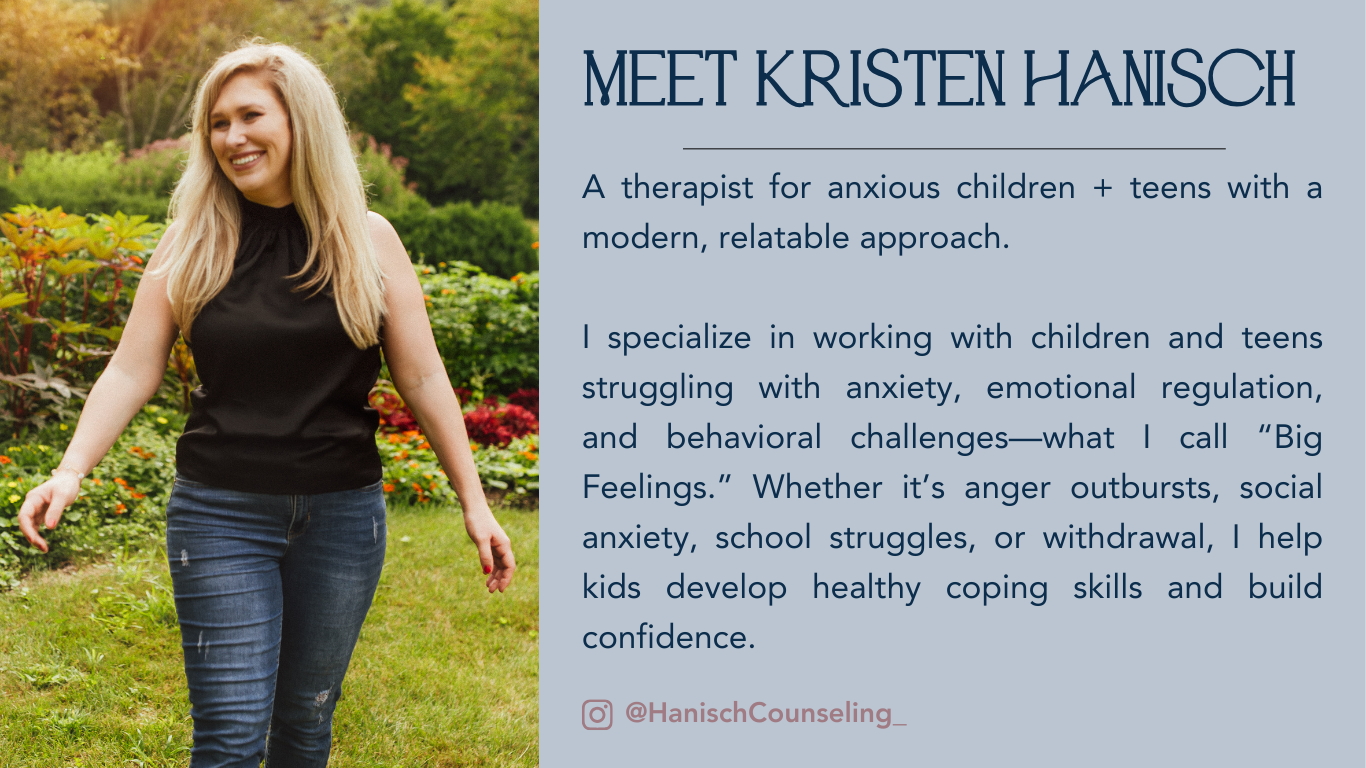
At Hanisch Counseling Services, I offer therapy intensives and focused support for anxious children and teens—especially for families who’ve tried therapy before and haven’t seen the progress they hoped for.
I specialize in anxiety, friendship drama, people-pleasing, and perfectionism—and I work virtually with families in New Jersey, Florida, and Vermont, with in-person options in NJ.
Let’s work together to help your child feel calmer, braver, and more like themselves!