How the Spiral Technique Helps Anxious Teens Feel Safe and In Control
The Spiral Technique: EMDR for Teen Anxiety
Ever watched your teen spiral into anxiety—and felt helpless to stop it?
If you’re a parent of an anxious teen, you know the signs all too well: the racing thoughts, the overwhelm, the tension that seems to hijack their entire body. And while you may have tried deep breathing, grounding tools, or positive talk, sometimes those strategies just aren’t enough to break the cycle.
That’s where the Spiral Technique comes in—a gentle, body-based tool we use in EMDR therapy for teens to help them calm their nervous system and regain a sense of internal safety.
This isn’t just another coping skill to throw at your child. It’s a structured way to shift their brain and body from panic to presence.
What Is the Spiral Technique?
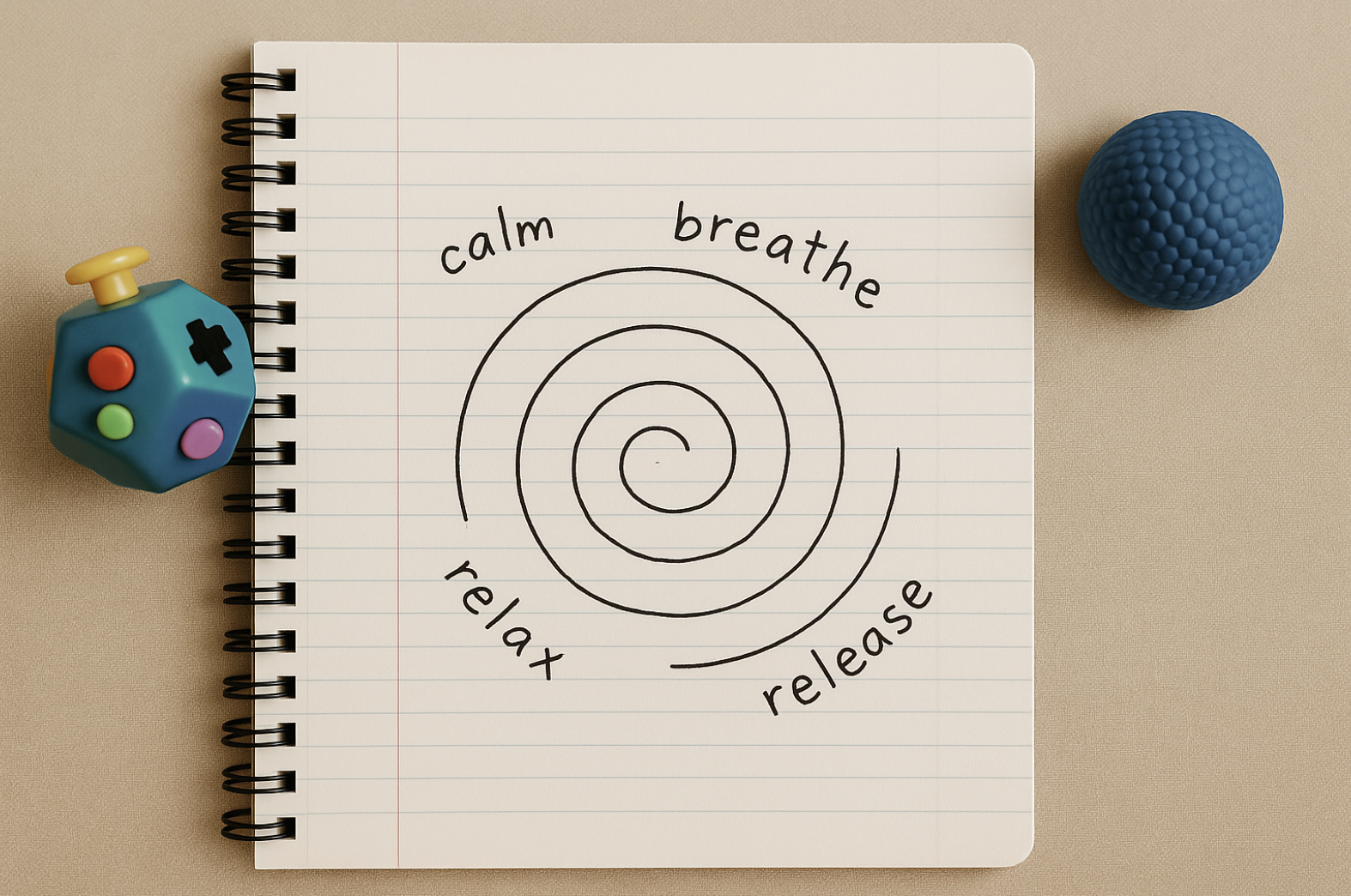
The Spiral Technique is a coping skill for teens that uses guided imagery and bilateral stimulation—like slow tapping—to create a calming experience during moments of distress. It’s often used in EMDR sessions as a preparation tool, helping teens regulate their emotions.
Here’s how it works:
Your teen imagines a wide spiral shape, slowly winding inward.
As they mentally trace the spiral toward its center, they breathe deeply and slowly.
Simultaneously, we pair this imagery with light, rhythmic tapping (or another form of bilateral stimulation), guiding their body into a state of calm.
The spiral motion helps organize scattered thoughts, while the tapping signals safety to the nervous system. The result? Your teen starts to feel grounded, in control, and safe—often within just a few minutes.
Why This Works for Anxious Teens

Anxiety in teens often shows up as racing thoughts, tight muscles, irritability, or even shutdown.
That’s because their fight-or-flight response gets triggered—even when they’re not truly in danger.
The Spiral Technique helps your teen’s brain register:
👉 “I’m not in danger. I’m just overwhelmed.”
By following the spiral inward, they’re learning to:
🌀 Slow their racing thoughts
🌀 Calm their overactive nervous system
🌀 Reconnect with their breath and body
🌀 Regain focus and internal safety
Unlike traditional grounding tools, this technique combines visual, tactile, and emotional regulation strategies, making it ideal for teens who struggle with staying present.
coping skills teens can do anywhere
One of the best parts about the Spiral Technique is that it’s simple—and can be used almost anywhere! We teach teens how to use it:
Before a big test or presentation at school
At night when their thoughts won’t stop spinning
After a conflict with a parent or friend
During a therapy session when emotions run high
Anytime they feel dysregulated or “off”
It’s subtle enough to use in public, empowering your teen to manage their anxiety without feeling embarrassed or dependent on a therapist in the moment.
EMDR Therapy for Teen Anxiety: Building Coping Skills That Stick
At our practice, we specialize in anxiety therapy for teens, offering tools like the Spiral Technique as part of our extended EMDR sessions. These longer sessions allow time for teens to:
Build strong coping strategies
Learn how to regulate their nervous system
Feel emotionally safe enough to address deeper issues (like perfectionism, trauma, or social anxiety)
Whether your teen struggles with teenage anxiety symptoms like irritability, panic attacks, or avoidance—or just feels overwhelmed by life—we believe therapy should be more than “talking it out.” It should be empowering, experiential, and customized to their needs.
Helping Your anxious Teen Feel Better
If your teen seems stuck in patterns of anxiety, we want you to know there are tools that can help. Tools that go beyond surface-level advice and give them real strategies to feel safe in their body again.
The Spiral Technique is just one example of how we use EMDR to support teens on their mental health journey—and help them stop the spiral before it takes over.
✨ Curious how EMDR therapy and coping skills like this can help your child?
Reach out today to schedule a consultation and learn more about our teen-centered therapy intensives.