the 3-3-3 Grounding technique
Hey Alexa, How do I help my anxious child???
Here is a Quick, Kid-Friendly Grounding Technique That Actually Works!
If you’ve ever watched your child spiral into a panic—over a test, a social situation, or even just getting out the door in the morning—you know how helpless it can feel.
You want to say the right thing.
You want to make it better.
But when anxiety takes over, words aren’t always enough.
As a child and teen therapist, one of the most powerful (and simple) coping skills for kids that I teach kiddos is the 3-3-3 Rule.
It’s fast. It’s kid-friendly. And most importantly—it works.
WHAT IS THE 3-3-3 RULE FOR CHILD ANXIETY?
If you’re wondering, “What’s a simple grounding technique I can use when my child is anxious?”—this is it.
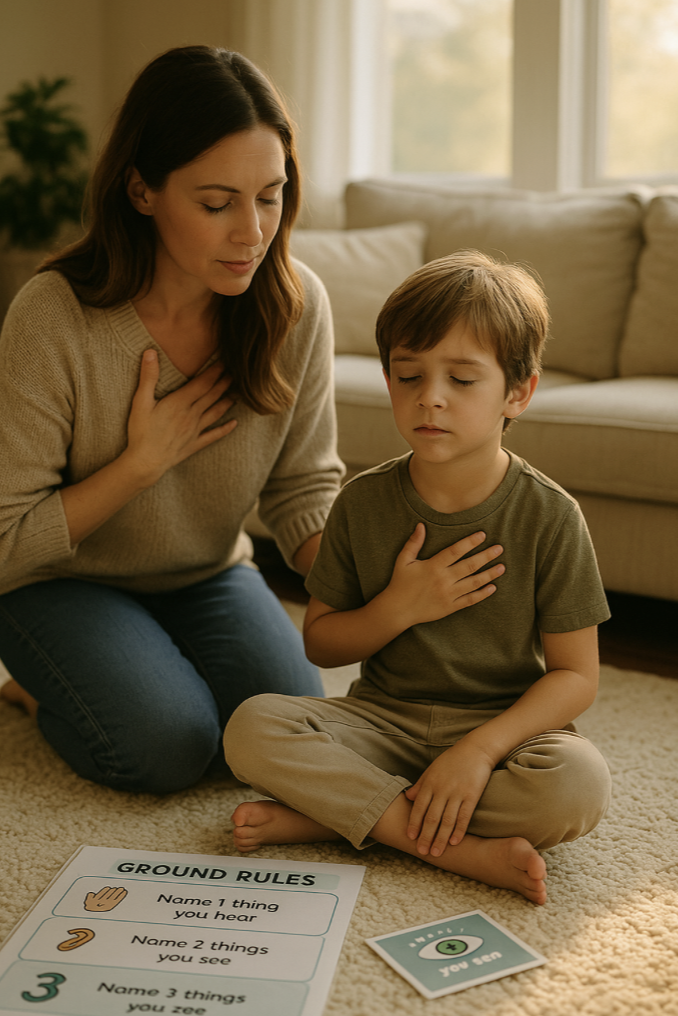
The 3-3-3 Rule is a mindfulness-based grounding strategy that brings your child’s attention back to the present moment when their brain is overwhelmed or panicking. It works by engaging the senses and the body—two things that help signal safety to the nervous system.
Here’s how to use the 3-3-3 Rule with your child:
Name 3 things you can see
Name 3 things you can hear
Move 3 parts of your body (wiggle fingers, shrug shoulders, stomp feet)
That’s it. But don’t let the simplicity fool you—this tool is backed by science and is incredibly effective for calming anxious thoughts and re-regulating the body during moments of emotional overload.
Why Does the 3-3-3 Rule Work So Well for Anxious Kids?
When a child is anxious, their body is in fight-or-flight mode. That means they’re not thinking clearly, problem-solving, or listening. Their brain is telling them: You’re not safe.
This is why reassurance often doesn’t work—it’s like talking to someone whose brain is trying to escape a tiger.

The 3-3-3 Rule doesn't try to talk your child out of the fear. It just gives their brain something else to do — which is often enough to break the spiral.
It helps kids:
Slow down racing thoughts
Feel more grounded in their body
Shift from panic to presence
Regain a sense of control
And when practiced regularly, it becomes a go-to coping skill your child can use independently—even at school or in social situations!
How Can I Make the 3-3-3 Rule Fun for My Child?
You might be wondering, “What if my child doesn’t want to do it?”
Totally valid question. The key is to make it playful.
Try saying:
“Let’s play the 3-3-3 Game. Quick—what are three things you can see in the room right now?”
“Now freeze... what can you hear?”
“Can you do three silly moves?”
You can even pair it with a calming phrase like:
“We’re safe. We’re here. We can do this together.”
This helps make the practice feel safe and comforting, not therapeutic or forced. Over time, it becomes familiar—and familiar means soothing to an anxious brain.
How Do I Know if the 3-3-3 Rule Is Right for My Child?
If your child has trouble calming down after a stressful event, avoids going to school, or often says “I feel weird” or “my tummy hurts,” they may be experiencing child anxiety.
Parents often ask:
“What’s a good first step when I think my child has anxiety?”
The answer: Start with simple, sensory-based coping skills. And the 3-3-3 Rule is one of the best places to begin!
If your child responds well to it, you’ve found a tool you can build on. If not, don’t worry—every child is different, and there are many other strategies that can help.
When to Consider Therapy for Child Anxiety
If your child’s anxiety is frequent, interferes with their daily life, or leads to major meltdowns or shutdowns, it might be time to reach out for professional support.
In therapy, we teach kids coping skills like the 3-3-3 Rule, but we also help them explore what’s fueling their anxiety—so they’re not just managing symptoms but actually starting to feel better from the inside out!
I work with families across New Jersey, Florida, and Vermont, offering virtual sessions and in-person support for kids with anxiety. If your mornings feel chaotic, or if you just want your child to feel calmer and more confident in themselves—you don’t have to do it alone.
Let’s Help Your Child Feel Safe Again!!
Ready to stop guessing and start using strategies that actually work?
👉 Book a free consultation to learn more about how therapy can help your child feel more grounded, regulated, and ready to face the day—without the panic.