Brainspotting Therapy for Kids & Teens
What is Brainspotting and how does it work?
If you’ve heard of EMDR, you might also be hearing more about Brainspotting—especially when it comes to helping kids and teens heal. But what is Brainspotting? How does it differ from talk therapy? And when might it be a good fit for your child?
Let’s break it down:
What Brainspotting is and why it’s growing in popularity
How Brainspotting helps kids and teens with anxiety, trauma, and emotional dysregulation
What a session might look like
How to decide whether it’s a good fit
What to expect—and how to get started
What Is Brainspotting?
Brainspotting is an evidence-based brain-body therapeutic approach designed to help people access and process emotional pain, trauma, and stress stored in the nervous system. It’s considered a somatic or neurobiological therapy because it connects the brain with body sensations and works on deeper levels than just words or thoughts.
It was developed by Dr. David Grand as a kind of evolution off of EMDR, but with a stronger emphasis on the brain-body connection and the idea that where you look matters.
One core principle: “Where you look affects how you feel.” Brainspotting uses eye positioning (or visual “spots”) to tap into brain areas that hold unresolved emotional activation.
Unlike traditional talk therapy, the client doesn’t need to retell traumatic stories in detail. Rather, the brain is invited to process what’s stuck via the visual and felt experience.

Why Brainspotting Works So Well for Kids & Teens
Brainspotting is gaining popularity in youth mental health settings because it offers several advantages over talk-only methods:
Less reliance on verbal processing
Kids or teens who struggle to articulate feelings or memories benefit from a modality that doesn’t require long verbal explanations.Gentler and non-invasive
Because the brain does much of the work, clients can stay in control and are less likely to feel overwhelmed.Accesses deeper emotional patterns
It doesn’t just target conscious thoughts—it works to release emotional and physiological blocks stored in the subcortical brain.Faster shifts in many cases
Some clinicians report that fewer sessions may be needed compared to classic talk-based trauma therapies.Works even when the child “can’t explain” what’s wrong
Many youth mental health struggles (anxiety, panic, behavioral issues, emotional dysregulation) are rooted in implicit memory and nonverbal stress. BSP gives a pathway in.
Sources back this up: Brainspotting is being used with children to reduce tantrums and support emotional regulation. ResearchGate It is also being applied for anxiety and depression in teens, helping them release emotional blocks and improve self-regulation.
What Brainspotting Can Help With (In Kids & Teens)
Here are some of the common issues where Brainspotting shows potential (especially among youth):
Anxiety, phobias, panic attacks
Trauma, PTSD, single-incident or developmental
Depression or mood struggles
Grief, loss, and attachment wounds
Behavioral or emotional dysregulation (meltdowns, irritability)
Performance anxiety (academics, sports, arts)
Stress from family transitions (divorce, moves)
Somatic symptoms (headaches, stomachaches)
Issues related to ADHD (emotional impulsivity)
Its flexibility and depth make it a good candidate when talk therapy isn’t enough or when the emotional roots are not yet fully known.
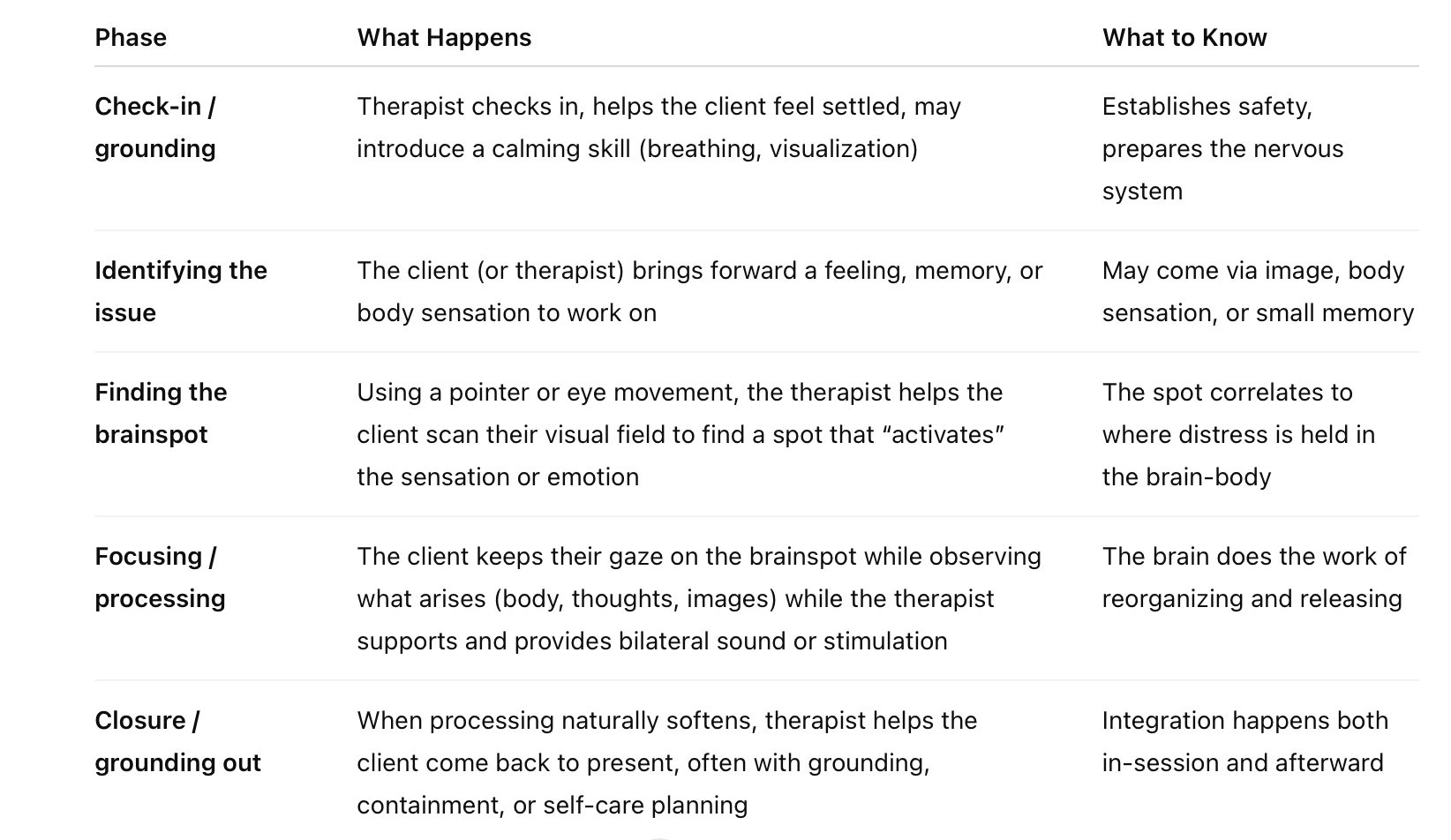
What Happens in a Brainspotting Session
While each therapist and child/teen is unique, here’s a general roadmap of what a Brainspotting session might look like:
Is Brainspotting Right for Your Child??
It’s not for everyone—or not always as the sole method—but there are several signs it may be a good fit:
When talk therapy feels stuck or overwhelming
When your child is highly verbal but still emotionally blocked
When they resist opening up in traditional therapy
When somatic or body symptoms dominate (e.g. chronic headaches, GI symptoms with no medical cause)
When you suspect deeper emotional roots (trauma, shame, attachment wounds)
To choose a practitioner, look for:
Proper Brainspotting training and certification
Experience working with youth and adolescents
An environment that feels safe, paced, and sensitive
Testimonials or case descriptions of youth clients
What to Expect & How to Support Your Child
Processing often continues after the session—offer them rest and space
You may see emotional shifts, improved regulation, or subtle changes over days
Avoid pushing them to talk more immediately
Provide safety, stability, and co-regulation
Follow up with grounding or coping tools learned in therapy
Getting Started: Steps for Parents
Research Brainspotting practitioners in your area
Ask upfront: “Have you worked with kids/teens using Brainspotting?”
Ask about session length, informed consent, and how they pace processing
Book an initial consult to see fit and compatibility
Prepare your child by normalizing the process (you don’t need to retell trauma)
Brainspotting at
Hanisch Counseling Services
If your child or teen is struggling with anxiety, emotional overwhelm, trauma, or body-based distress—and traditional talk therapy hasn’t fully unlocked relief—Brainspotting offers a gentle, brain-based pathway to deep healing.
By integrating body awareness, visual processing, and the brain’s innate ability to reorganize, it supports emotional regulation, resilience, and transformation.
If you’re curious whether this modality might be right for your child, I’d be happy to help you explore it! Feel free to reach out or book a consult to discuss how this approach could complement the work your teen is already doing.