Summer Anxiety in Teens
Summer Anxiety in Teens: Why It Gets Worse Before School Starts (And What Parents Can Do)

TL;DR: Summer anxiety in teens is real — it just shows up differently than school-year stress. Lost routine, too much unstructured time, social media comparison, and quiet dread about the next school year can all build up even while school's out. This post covers why it happens, the signs parents often miss, practical steps you can start today, and how EMDR or a therapy intensive can help your teen feel ready before September!
Summer is supposed to be the easy season. No homework, no early alarms, no hallway drama! So when your teen seems more anxious in July than they were in April, it can catch you off guard. You might even feel a little frustrated — didn't the stress go away when school let out?
Summer anxiety in teens is just as real, and sometimes more intense, than anxiety during the school year. It just wears a different disguise. If you're watching your teen struggle right now, you're not imagining it, and you're definitely not alone. Let's talk about why this happens and what you can actually do about it before the school year starts back up…
Why Anxiety Can Increase During Summer
It seems backwards, but summer anxiety in teens often has more to do with structure and predictability than it does with academic pressure alone. When that structure disappears for ten or twelve weeks, anxiety doesn't take a vacation — it often finds new material to work with.
Disrupted routines. School gives teens an external rhythm: wake up, go here, do this, see these people, come home. When that rhythm vanishes, some teens thrive with the freedom. Others feel unmoored. Without a schedule telling them what to do next, anxious brains tend to fill the silence with worry. This is one of the quieter drivers of summer anxiety in teens — the absence of structure, not the presence of any single stressor.
Too much unstructured time. Free time sounds like a gift, and for some kids it is. But for a teen prone to anxiety, long stretches with nothing planned can turn into long stretches of overthinking. Rumination loves an empty calendar!
Social media and social comparison. Summer is prime time for scrolling, and scrolling is prime time for comparison. Your teen sees friends on vacation, at parties, hanging out without them, and it's easy for their brain to spin that into a story about being left out or falling behind socially. This kind of quiet isolation can be just as painful as anything happening in a school hallway.
Loss of built-in social contact. School is, whether we like it or not, a place where teens are guaranteed to see people every day. Summer takes that away. Even teens with solid friendships can start to feel disconnected when the natural, daily structure for seeing friends disappears.
Anticipation of the school year. This is the one parents often miss. Back-to-school anxiety doesn't wait until August. For many teens, worry about the next school year starts creeping in as early as June — new teachers, new schedules, social dynamics, academic pressure. The further away September feels, the more room there is for worry to fill in the blanks. And imagination usually fills them with worst-case scenarios.
None of this means something is wrong with your teen. Summer anxiety in teens is, more than anything, a sign that their nervous system is responding to a loss of predictability — and that's a very human thing to do.
Signs Your Teen May Be Struggling
Summer anxiety in teens doesn't always look like worry on the surface. It's easy for parents to miss the signs, especially during a season that's supposed to be relaxed. Here's what to watch for.
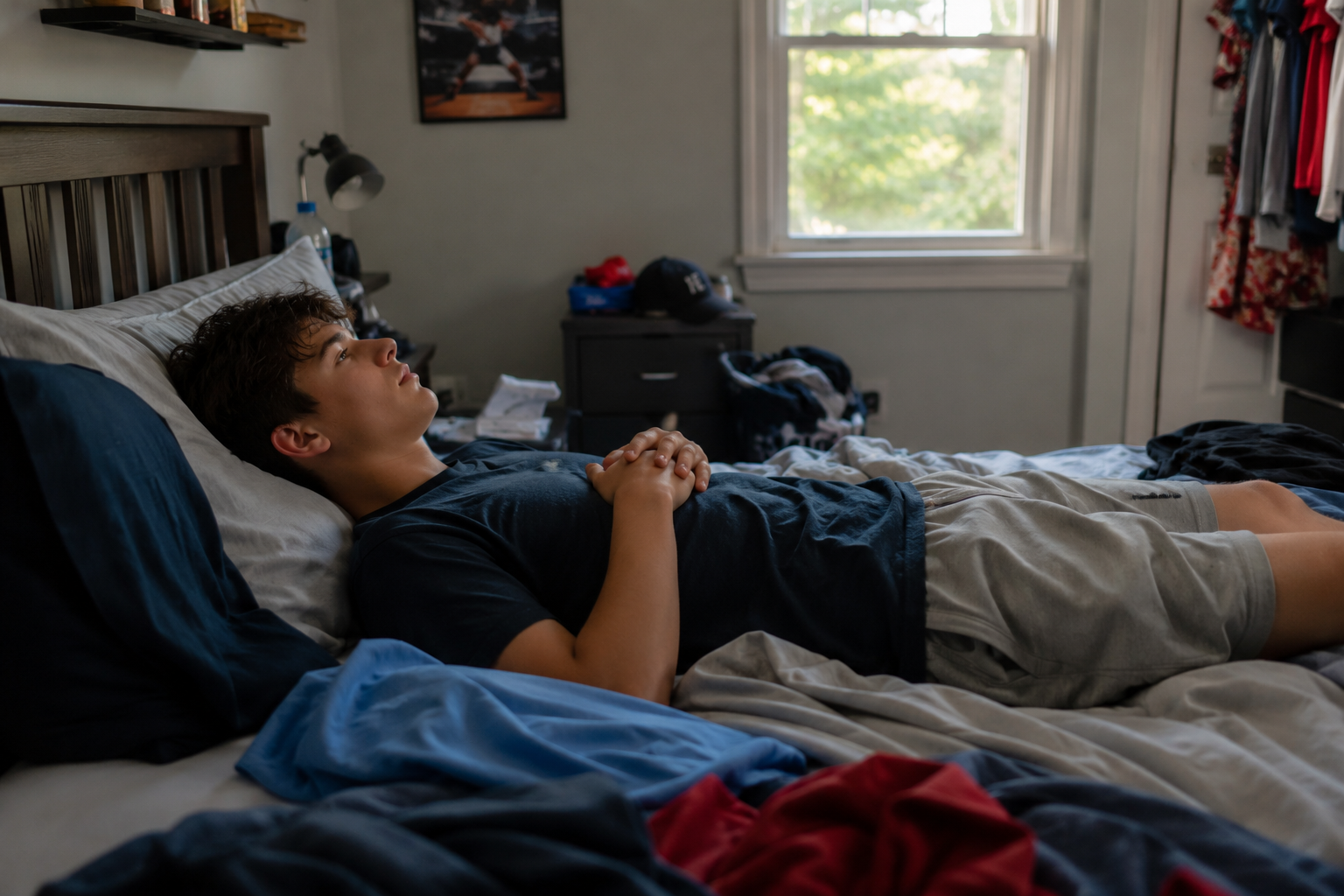
Emotional signs- increased irritability or a short fuse over small things, tearfulness that seems to come out of nowhere, or a persistent sense of dread about the summer ending. Some teens describe it as a feeling of unease they can't quite name.
Behavioral signs- withdrawing from friends or family, spending far more time alone in their room than usual, avoiding plans they would normally be excited about, or an increase in phone and social media use thats more like escape than enjoyment.
Physical signs- trouble falling or staying asleep, changes in appetite, stomachaches or headaches with no clear medical cause, and general restlessness can all be a teen's body expressing what words aren't yet.
If you're noticing a combination of these, it's worth paying closer attention — not with alarm, but with curiosity and care.
Picture a typical Tuesday in July: a teen sleeps until noon, spends the afternoon scrolling through friends' vacation photos, snaps at a sibling over nothing, and can't explain why their stomach's been off all week. Nothing "happened." But all of that can add up to a teen who's quietly overwhelmed, even in the middle of summer break.
How Parents Can Help Right Now
You don't have to wait until summer anxiety in teens spirals into something bigger before you start helping! Small, consistent shifts can make a real difference, and none of these require turning summer into a second school year.
Rebuild a loose sense of structure. Regular wake times, a few anchor activities each week, predictable mealtimes— these small anchors give their nervous system something steady to hold onto, and steady routines are one of the simplest ways to ease summer anxiety in teens without making the season feel like school again.
Balance downtime with connection. Encourage in-person time with friends, even in small doses. A weekly standing plan, like a Friday hangout or a family outing, gives your teen something to look forward to instead of something to worry about.
Set gentle boundaries around social media. You're not trying to police your teen's phone use, but naming the pattern helps: "I've noticed you seem more anxious after being on Instagram for a while — want to talk about that?" Curiosity works better than restriction alone!!
Talk about the school year without over-focusing on it. Avoidance can feel like relief in the moment, but it tends to make anxiety bigger over time. Instead of avoiding the topic of September altogether, create small, low-pressure moments to talk about it — a car ride, a walk, folding laundry together. Ask open questions like "What feels most stressful about going back?" rather than offering reassurance right away. Something as simple as watching an episode of something on Sunday evening and asking "Anything about school you've been thinking about?" can open a door that a sit-down conversation never would.
Model calm, not certainty. You don't need to have all the answers about how the school year will go. What helps most is staying steady yourself. Teens borrow their sense of safety from the adults around them.
Watch the line between support and avoidance. It's natural to want to protect your teen from discomfort. But constantly rescuing them from anxiety-provoking situations can backfire. It can reinforce the belief that they can't handle them. The goal isn't to eliminate anxiety completely. It's to help your teen build the confidence that they can move through it.
How EMDR and Therapy Intensives Can Help Before School Starts
Sometimes summer anxiety in teens has roots that go deeper than a change in routine, and that's completely okay. If your teen's anxiety feels bigger than what everyday strategies can shift, anxiety therapy for teens can make a meaningful difference, especially when there's still time before school starts.
EMDR for anxiety is one of the most effective approaches we use with teens. EMDR — Eye Movement Desensitization and Reprocessing — helps the brain process the experiences, memories, and beliefs that fuel anxiety. It doesn't just manage symptoms on the surface; it works with what's underneath them. For a teen who feels anxious about school, friendships, or performance, EMDR can help get to the root of summer anxiety in teens and help their nervous system finally let it go.
For families short on time before September, therapy intensives for teens offer a faster path forward. Instead of waiting weeks for progress through traditional once-a-week sessions, an intensive condenses focused therapeutic work into a few extended sessions. This is especially helpful for teens who want (or need) meaningful change before the first day of school rather than partway through the semester. Think of a teen who's dreaded the first day of school every August for years — an intensive in early or mid-summer gives her time to actually work through that dread before the anticipation has a chance to build for months.
The goal of this work isn't to erase every worry your teen has about the school year. It's to help them walk into September with more confidence, more coping tools, and a nervous system that isn't running on high alert before they've even walked through the door.
Let's Get Your Teen Ready Before the Back-to-School Rush
If you're noticing summer anxiety in teens showing up in your own house, you don't have to wait until it becomes overwhelming to get support. The weeks before school starts are actually one of the best times to do this work, while there's still room to build skills and process what's been weighing on them.
At Hanisch Counseling Services, we work with New Jersey teen anxiety therapy clients using approaches like EMDR and therapy intensives designed to help teens feel more confident, capable, and ready before September arrives. As a Fairfield, NJ child and teen therapist practice, we know how quickly summer turns into back-to-school season — and how much of a difference it makes to start now instead of later.
Schedule a consultation today, and let's help your teen feel steady, supported, and ready for the year ahead!